



News
Our FORt trading platform is recognized as one of the most secure platforms in the cryptocurrency space. We employ a multi-layered security system designed to minimize the risk of attacks or theft. This system includes the segregation of cold and hot wallets, multi-signature authentication, data encryption, risk monitoring, and alerts for anomalous login activity, all aimed at bolstering the security of accounts and assets. FORbit also maintains a user protection fund (SAFU) to address specific security incidents.
We regard regulatory compliance as a cornerstone of our growth, continuously refining our identity verification processes, risk controls, data security measures, and anti-money laundering (AML) protocols. We actively adhere to applicable laws, regulations, and requirements, and operate under the oversight of US federal government agencies and tax authorities, striving to create a secure, transparent, and reliable environment for digital asset services.
If you are new to FORbit, we recommend starting by learning the fundamentals of digital wallets, USDT, and blockchain technology.
Begin with small transactions and gradually build toward consistent daily returns.
Cryptocurrency trading involves buying and selling digital currencies to profit from price fluctuations.
In short, much like trading stocks, forex, or gold, traders buy digital currencies when prices are low and sell when they are high, or generate returns through other trading methods.
Some of the most common cryptocurrencies include:
Bitcoin (BTC)
Ethereum (ETH)
Ripple (XRP)
Solana (SOL)
Binance Coin (BNB)
Common trading methods include:
Spot trading: Directly purchasing digital currencies.
Example: Buying BTC at $100 and automatically selling it for a profit when the price rises to $110.
Trading based on price fluctuations without the need to hold the underlying asset.
Using leverage, which amplifies both potential gains and risks.
Using automated trading bots to execute trades and secure profits, avoiding the need to hold the currency long-term.
Suitable for highly volatile markets to ensure steady returns.
Dollar-Cost Averaging (DCA)
Investing a fixed amount in digital currencies at regular intervals.
Used to mitigate the risk of price volatility associated with large, one-off purchases.
Fort’s expert analysts provide users with precise recommendations on high-yield cryptocurrencies.
Register on the platform's official website.
Sign up and create an account using your mobile phone number.
Create a password, keep it secure, and do not share it with anyone.
Upload the required information and link your bank account to complete identity verification and enable withdrawal functionality.
You can make deposits and conduct transactions daily between 7:00 PM and 9:00 PM.
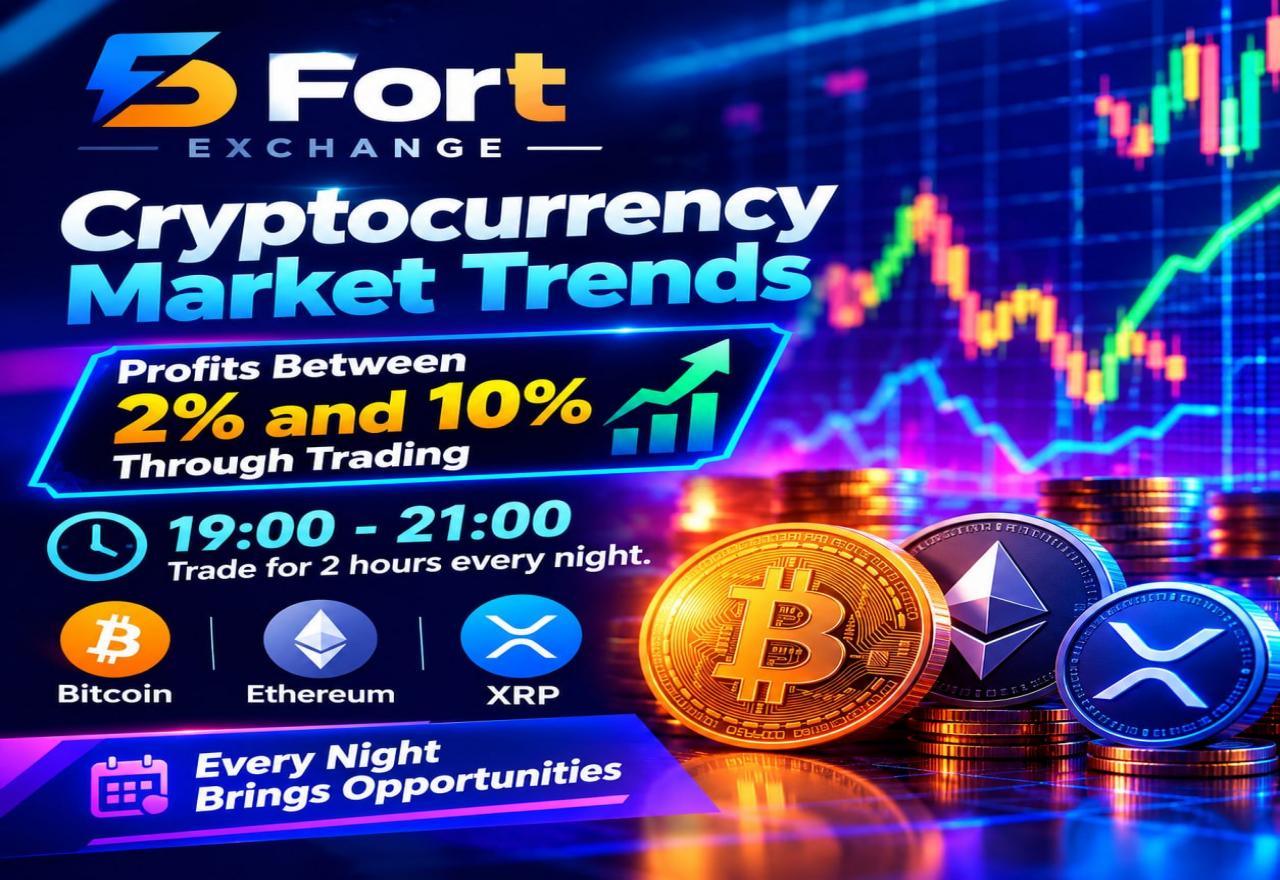
The FORbit trading platform is open for trading every evening from 7:00 to 9:00, offering returns of 2% to 10% based on daily trading volume.
Bitcoin Reclaims the $80,000 Mark
Driven by renewed interest in spot Bitcoin ETFs, the price of Bitcoin has recently climbed back above $80,000.
🏦 Continued high levels of institutional participation
💰 Bitcoin ETF flows shift to net inflows
🔐 Ethereum staked volume reaches approximately 35% of total supply
🌐 Cryptocurrency ETF assets under management continue to expand
📈 Digital assets remain a focal point of global markets
Stay Tuned
Forbit Exchange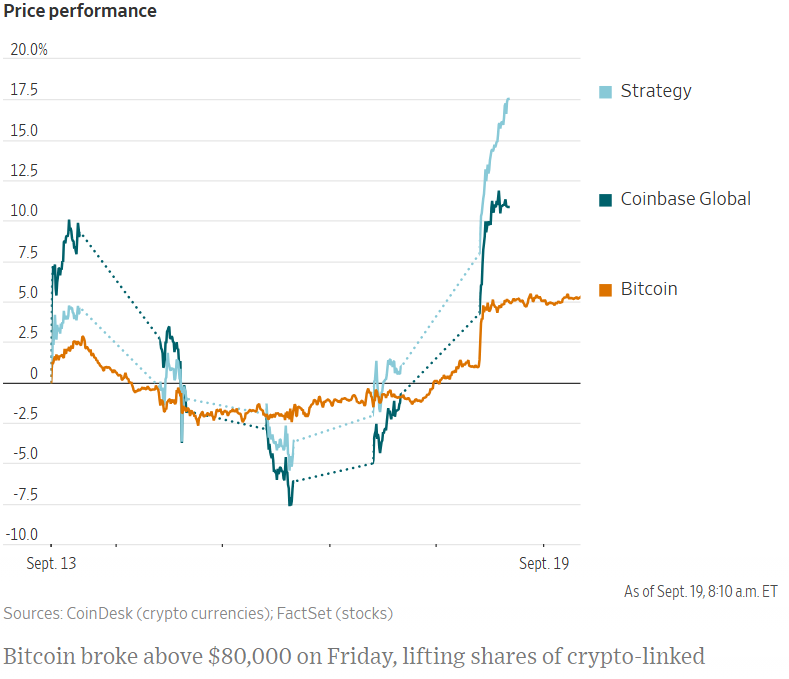
Trade · Grow · Achieve
Institutional investors are now exerting a more profound influence on the crypto market than retail traders, marking a turning point in what Wintermute describes as the evolution of digital assets.
According to the firm's latest market report, institutional investors accounted for approximately 72% of spot trading volume on its over-the-counter (OTC) desk during the first half of 2026—an all-time high and a significant increase from the roughly 61% recorded in the second half of the previous year.
"As the crypto market endured a bear phase, with retail investors largely absent and focused on equities, the market structure became clearer," the report noted. "Regardless of near-term price action, the asset class is maturing."
Institutional investors typically do not chase short-term price fluctuations; instead, they operate under clear mandates and risk limits, maintaining positions for longer periods. The report indicates that this results in lower market volatility and liquidity concentrated within a smaller group of assets.
Wintermute’s analysis shows that realized volatility has dropped from around 70% in earlier market cycles to approximately 45% in the current cycle. The report also found that institutional investors trade a relatively narrow range of tokens, whereas retail investors continue to spread their trading activity across a wider array of assets.
This concentration could make future altcoin rallies more selective.
"The result is that the capital flows driving market direction are increasingly concentrated in a few names, making trading more selective," the report stated. It added that as institutional capital focuses on a limited number of assets, broad-based rallies—where the majority of alternative cryptocurrencies rise in unison—are becoming increasingly unlikely.
**Growing Interest in Derivatives and Tokenization**
The report also highlighted the rising use of derivatives as another significant trend. Wintermute noted that the notional trading volume of altcoin options on its OTC desk grew roughly 3.4-fold between the second half of 2025 and the first half of 2026, driven primarily by investors seeking yield rather than pure price exposure. Meanwhile, Contracts for Difference (CFDs) are being utilized across a broader range of cryptocurrencies for directional trading, hedging, and diversification strategies. Beyond trading, the tokenization of real-world assets continues to gain momentum; the value of tokenized assets climbed nearly 50% to $31 billion in the first half of this year, while average monthly transfer volumes more than doubled to reach $9 billion. The firm noted that institutional adoption focuses primarily on tokenized Treasury bills, money market funds, and private credit, whereas retail investors are more active in tokenized equities.
While Wintermute anticipates a resurgence of retail participation in the next crypto bull market, it believes institutional influence is unlikely to wane. Instead, the firm suggests that the market is increasingly reflecting the characteristics of its largest participants, with professional investors shaping liquidity, pricing, and the types of assets that attract capital.
DeFi stands for "Decentralized Finance," also known as "Open Finance." It operates without the need for trusted intermediaries, benefiting individuals who previously lacked access to such financial services. Consequently, a mature market for trading financial assets has emerged within the DeFi space, with the vast majority of DeFi projects currently running on the Ethereum blockchain. A blockchain can be understood as a digital ledger jointly maintained by multiple participants, offering a high degree of resistance to tampering.
To illustrate with a simple example:
Traditional ledger: Managed by a single bank.
Blockchain ledger: Jointly maintained by numerous computers around the world; each computer holds a copy and participates in data verification, making it extremely difficult for anyone to secretly alter the records.

Cryptocurrency trading involves buying and selling digital currencies to profit from price fluctuations.
In short, much like trading stocks, forex, or gold, traders buy digital currencies when prices are low and sell when they are high, or generate returns through other trading methods.
Some of the most common cryptocurrencies include:
Bitcoin (BTC)
Ethereum (ETH)
Ripple (XRP)
Solana (SOL)
Binance Coin (BNB)
Common trading methods include:
Spot trading: Directly purchasing digital currencies.
Example: Buying BTC at $100 and automatically selling it for a profit when the price rises to $110.
Trading based on price fluctuations without the need to hold the underlying asset.
Using leverage, which amplifies both potential gains and risks.
Using automated trading bots to execute trades and secure profits, avoiding the need to hold the currency long-term.
Suitable for highly volatile markets to ensure steady returns.
Dollar-Cost Averaging (DCA)
Investing a fixed amount in digital currencies at regular intervals.
Used to mitigate the risk of price volatility associated with large, one-off purchases.
Forbit’s expert analysts provide users with precise recommendations on high-yield cryptocurrencies.
Our FORbit trading platform is recognized as one of the most secure platforms in the cryptocurrency space. We employ a multi-layered security system designed to minimize the risk of attacks or theft. This system incorporates measures such as the segregation of cold and hot wallets, multi-signature authentication, data encryption, risk monitoring, and alerts for anomalous login activity to safeguard accounts and assets. FORbit also maintains a user protection fund (SAFU) to address specific security incidents.
We prioritize regulatory compliance as a cornerstone of our development, continuously enhancing our identity verification mechanisms, risk controls, data security protocols, and anti-money laundering (AML) measures. We actively adhere to applicable laws, regulations, and requirements, and operate under the oversight of US federal government agencies and tax authorities, all with the aim of creating a secure, transparent, and reliable environment for digital asset services.
If you are new to FORbit, you can start by learning the basics of digital wallets, USDT, and blockchain.
Begin with small transactions and gradually build up steady daily returns.